


Instagram or LinkedIn? It's one of the most common questions businesses ask when planning their social media strategy. Both platforms offer powerful marketing opportunities, but they serve fundamentally different purposes, reach different audiences, and require distinct content approaches. Choosing the wrong platform can waste time, budget, and opportunities.
This comprehensive guide breaks down Instagram versus LinkedIn across key dimensions—audience demographics, content formats, advertising capabilities, and business objectives. Whether you're a B2B service provider, e-commerce brand, or local business in Bangalore, you'll discover which platform aligns with your goals and how to maximize your investment.
Understanding Platform Fundamentals
-
Instagram: Visual Storytelling – Best for brand awareness, consumer engagement, and visual products
-
LinkedIn: Professional Networking – Ideal for B2B marketing, thought leadership, and lead generation
-
Different Audiences – Instagram skews younger (18-34), LinkedIn attracts professionals (25-55)
-
Unique Content Strategies – Instagram favors lifestyle and creativity, LinkedIn values expertise and insights
Platform Comparison: Key Differences
1.Audience Demographics & Behavior
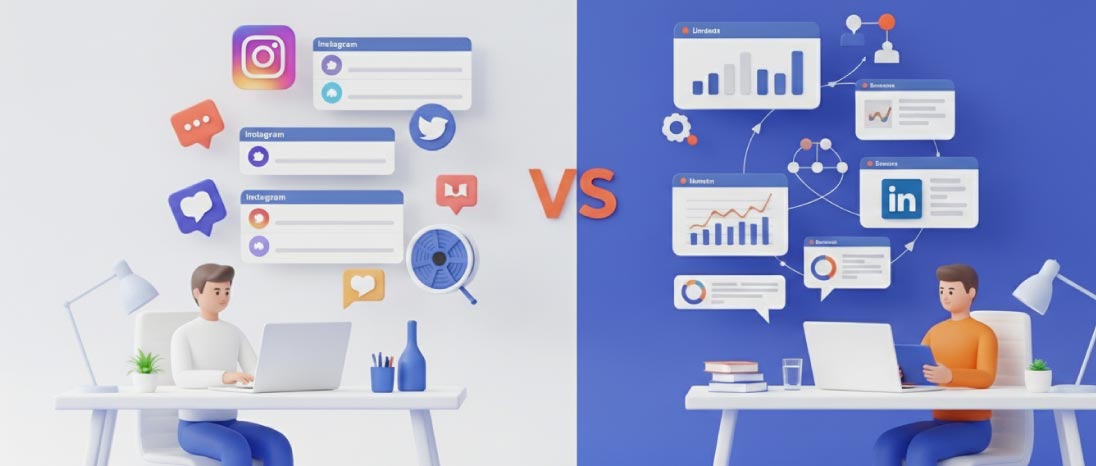
Instagram attracts 2 billion monthly active users, with 60% aged 18-34. Users engage for entertainment, inspiration, and lifestyle content—spending an average of 30 minutes daily scrolling feeds, watching Reels, and exploring Stories. The platform excels at visual storytelling, making it perfect for fashion, food, travel, lifestyle, and consumer product brands.
LinkedIn serves 900 million professionals, with 60% aged 25-55 and concentrated in business, tech, and professional services. Users engage for industry insights, career development, and business networking—consuming content during work hours. The platform dominates B2B marketing, professional services, SaaS, recruitment, and thought leadership, reaching decision-makers and influencers across industries.
2.Content Formats & What Works Best
Instagram content thrives on visual appeal: Reels (short-form video), Stories (ephemeral content), carousel posts, high-quality photos, and user-generated content. Success requires aesthetic consistency, trending audio, lifestyle storytelling, behind-the-scenes glimpses, and influencer collaborations. LinkedIn content emphasizes expertise: long-form articles, industry insights, case studies, professional achievements, and data-driven posts that educate and inform rather than entertain.
Making Your Platform Decision
Choose Instagram for B2C businesses, visual products, brand awareness campaigns, consumer engagement, lifestyle brands, and younger demographics. Choose LinkedIn for B2B companies, professional services, thought leadership, lead generation, high-ticket sales, and reaching decision-makers. Many successful businesses use both platforms strategically—Instagram for brand building and community, LinkedIn for credibility and qualified leads. The key is adapting your content strategy to each platform's unique culture and audience expectations.